

With Erin Hargrove, Director of Business Development at Lakeside HR Group
“Other Duties as Assigned” Is Doing Too Much Work
When was the last time you read one of your company’s job descriptions from beginning to end? I mean really read it. Does it describe the work the person does today? Would it help a candidate understand why they’d want the job? Could a manager use it to explain what success looks like six months in? Or is “other duties as assigned” holding the whole thing together with a paper clip and a prayer?
There’s a reason reviewing and updating job descriptions made it onto our Year-End HR Checklist. As companies review budgets and plan for the year ahead, they’re also looking at where their teams have gaps. Will they replace a departing employee? Add a new role? Is there a position that needs to be classified differently?

Before making those decisions, it’s worth checking whether the descriptions on file reflect the jobs people are doing now. Artificial intelligence is changing some day-to-day tasks, economic uncertainty continues, and budgets are being set for the upcoming year. Together, those shifts make this a good time to review job descriptions and the roles behind them more closely across the organization.
An Effective Job Description Has a Life After the Job Posting
It’s easy to think of a job description as something you pull up when you need to hire. Amy Toppen, Lakeside HR Group’s director of service delivery, sees it as the starting point for much more.

“A job description should do more than help you hire,” Amy said. “It should give an employee and their manager a shared understanding of the role, from onboarding and early performance conversations through future development.”
That shared understanding includes what the person owns, what they coordinate with others, and where they can expect support. It matters just as much for an existing employee as it does for a new hire.
Roles change as companies grow. Work gets added, priorities shift, and responsibilities move between people. If no one stops to name those changes, an employee and their manager can end up with two different understandings of the same job.
“Other duties as assigned” gives a team some flexibility. It’s less helpful when it becomes the explanation for an entire part of someone’s role.
Write Job Descriptions That Give Candidates a Reason to Care
Our recruiters look at job descriptions from another angle: Would this make a great candidate want to learn more or, better yet, apply?
Rebecca Wiken, a recruiter at Lakeside HR Group, encourages employers to think beyond the list of requirements and consider what candidates see in the opportunity.
“Companies can get so focused on their list of requirements that they forget to show candidates what makes the opportunity appealing,” Rebecca said. “And when experience with one specific system becomes a dealbreaker, they may overlook someone who could learn it quickly and bring a lot more to the role.”
An effective job description should tell candidates:
- What they’ll get to build, improve, lead or learn.
- What makes the work meaningful.
- Who they’ll work with and what support they’ll have.
It doesn’t need to promise that the team is a “family” or that every day will be an adventure. (Some candidates would consider either one a warning.) Specific details will do more to help the right person picture themselves in the role.
Rebecca’s point about systems is worth a closer look, too. Sometimes experience with a particular ERP, HRIS or other platform is essential from day one. At other times, a strong candidate who has worked with similar systems could learn quickly.
Before your next search, ask which qualifications are truly required, which would be helpful and which have stayed on the list simply because they were there the last time you hired.
Update Job Descriptions as the Work Changes
As stated above, AI is one reason to ask this question, although it won’t affect every role in the same way. Perhaps a tool now handles part of a task, while the employee spends more time checking its output or making decisions from it. Perhaps your team is still figuring out where AI fits. Either way, start with the work.
- What does this person do now that they didn’t do a year ago?
- What takes less time?
- What calls for more judgment?
If you add “AI proficiency” to a job description, be ready to explain what someone would need to do with it.
Review Job Requirements as the Hiring Market Changes
A job description also needs to make sense to the people you hope will apply. If a search is struggling, take another look at the requirements before deciding the right candidates aren’t out there.
- Are the level, compensation and responsibilities aligned?
- Does the role need to be on-site as often as the description says?
- Could you train someone who brings the underlying skills?
These questions are worth revisiting as you plan next year’s hiring.
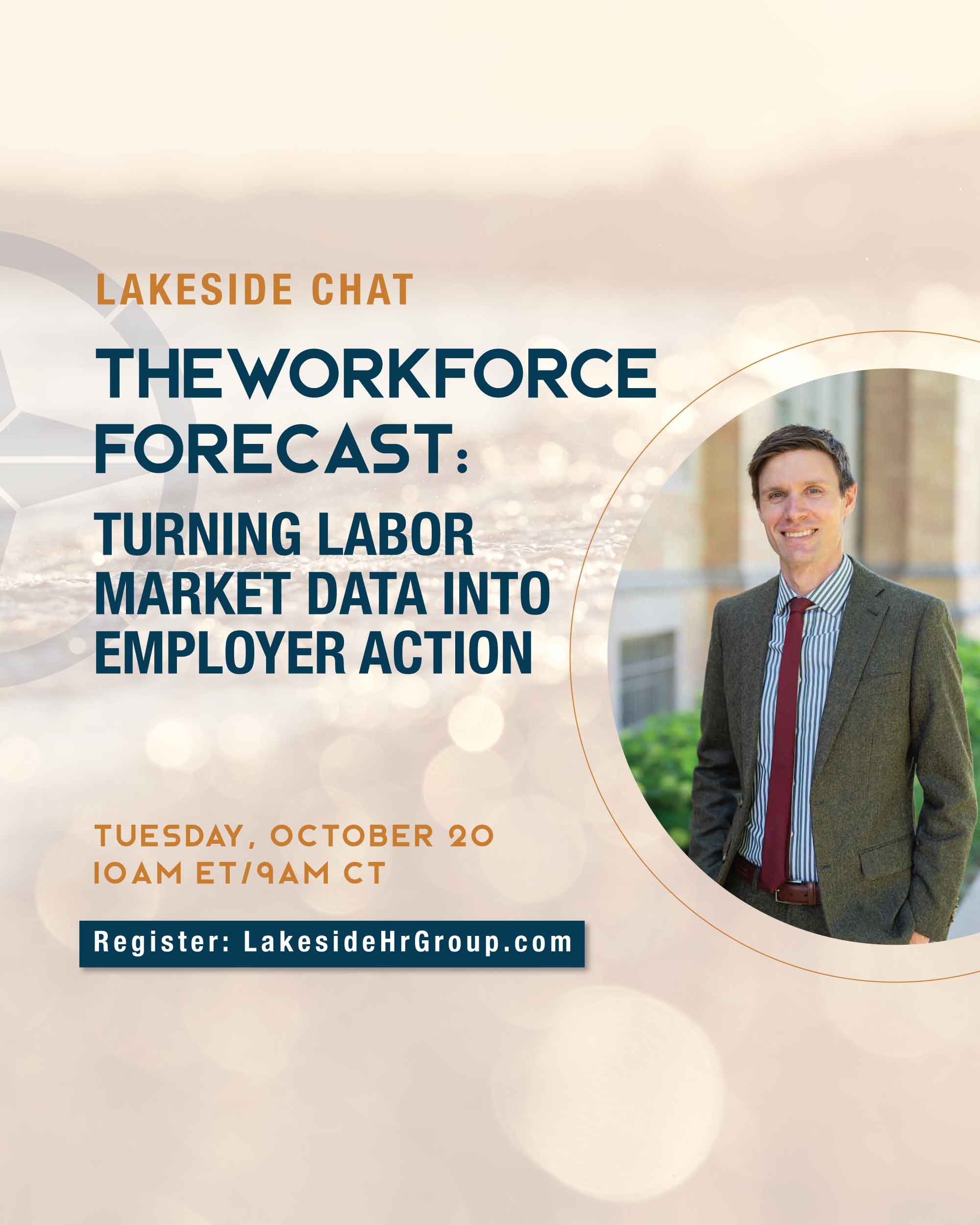
The Workforce Forecast: Turning Labor Market Data Into Employer Action
Join our next Lakeside Chat, when host Erin Hargrove and guest Tyler Schipper, associate professor of economics and data analytics at the University of St. Thomas, discuss The Workforce Forecast: Turning Labor Market Data Into Employer Action on Tuesday, Oct. 20 at 9 a.m. CT. They’ll explore what labor market data can tell us and how employers can use it to make decisions about hiring and workforce planning.
How to Start Your Job Description Review
You don’t need to tackle every description at once. Start with roles you plan to fill, one that has changed significantly or one where you keep hearing, “I thought that was someone else’s responsibility.”
Then ask the people closest to the work:
- What does this role own today?
- What does success look like in the first six months?
- What support does the person need?
- Which skills must they bring, and which can they learn?
- Would someone reading this understand both the expectations and the opportunity?
A useful job description should keep working long after the posting comes down. It can guide onboarding and performance conversations while giving candidates a clearer picture of the opportunity.
If reviewing and updating job descriptions is on your year-end list, our Year-End HR Checklist is a place to start. And if you could use another perspective, Lakeside’s HR consultants can help clarify the work and expectations, while our recruiters can help shape a search that reflects the candidates you need to reach.
Sometimes the best hiring conversation starts before the job is posted.
FAQs About Updating Job Descriptions
About Lakeside HR Group
We are a premier Recruiting and HR Consulting firm connecting people and businesses through personalized, full-service solutions. As a boutique firm of seasoned HR professionals, we specialize in providing customized HR services for small to midsize businesses. With expertise across diverse industries, positions, and states throughout the U.S., we partner with our clients to discover top talent and deliver the support needed to help their businesses thrive.